
Many B2B teams invest months into SEO, but a key question remains: how to use analytics for your B2B SEO strategy effectively to generate leads and revenue? Traffic numbers look fine, reports are full of charts, yet decision-makers still lack clarity.
This is where analytics becomes the backbone of a successful B2B SEO strategy. Instead of relying on assumptions, analytics shows exactly what is working, what is wasting budget, and where real growth opportunities exist.
This article will guide you through using analytics to refine and elevate your B2B SEO strategy. You will learn which tools to use, what metrics to track, and how to turn raw data into actionable intelligence that drives meaningful results.
How to Use Analytics for Your B2B SEO Strategy: Key Tools & Metrics
To build a data-driven strategy, you need the right tools. While many platforms are available, a few core tools provide the essential information most B2B marketers need to succeed.
Google Analytics 4 (GA4)
Google Analytics 4 is essential when learning how to use analytics for your B2B SEO strategy. It helps you understand who is visiting your website, how they got there, and what they do once they arrive. For B2B, GA4 is crucial for tracking user journeys across multiple sessions, which is common in a long sales cycle. It allows you to measure events like form submissions, document downloads, and video views, giving you a complete picture of user engagement.
Google Search Console (GSC)
Google Search Console is your direct line of communication with Google. It provides invaluable insights into your website’s performance in search results. With GSC, you can see which queries are driving traffic to your site, identify pages with high impressions but low click-through rates, and monitor for technical issues that could harm your rankings. It’s an essential tool for understanding your organic visibility.
SEO Platforms (e.g., Ahrefs, Semrush, Moz)
Comprehensive SEO platforms like Ahrefs, Semrush, or Moz complement Google’s free tools by providing deeper competitive insights and advanced keyword research capabilities. These tools allow you to track your keyword rankings over time, analyze your competitors’ backlink profiles, and discover new content opportunities. While they are paid services, the depth of data they provide can offer a significant competitive advantage.
Analyzing Traffic Sources and User Behavior
In real B2B SEO campaigns, especially for SaaS and service-based businesses, organic traffic growth alone rarely tells the full story. It’s common to see steady traffic increases without a matching rise in qualified leads. Analytics helps uncover whether visitors are decision-makers, researchers, or unqualified traffic, allowing you to adjust content and targeting accordingly.
Deconstruct Your Traffic Sources
In Google Analytics, navigate to the “Traffic acquisition” report. This report breaks down your traffic by channel, such as Organic Search, Direct, Referral, and Paid Search. For B2B SEO, your primary focus will be on Organic Search.
Look at the volume of users and sessions coming from this channel. Is it growing month-over-month? A steady increase indicates your SEO efforts are paying off. Also, examine the engagement rate for organic traffic. A high engagement rate suggests that you are attracting the right audience who finds your content valuable.
Evaluate User Behavior Metrics
Once users arrive on your site, what do they do? Key user behavior metrics provide the answer.
- Engaged Sessions: GA4 measures “Engaged sessions,” which is a more meaningful metric than the old bounce rate. An engaged session lasts longer than 10 seconds, has a conversion event, or has at least two pageviews. A high number of engaged sessions from organic traffic is a strong positive signal.
- Average Engagement Time: This metric tells you how long users are actively spending on your pages. Longer engagement times on your blog posts, case studies, and service pages suggest the content is compelling and relevant. If key pages have low engagement times, it may be a sign that the content isn’t meeting user expectations.
- Pages Per Session: In a B2B context, buyers often conduct extensive research. A healthy pages-per-session number shows that users are exploring your site to learn more about your company and its solutions.
Using Analytics to Identify High-Performing Keywords
In B2B environments with long sales cycles, prioritizing keywords tied to commercial investigation and solution comparison often delivers higher pipeline value than high-volume informational terms alone.
In Google Search Console, the “Performance” report is your go-to resource. This report lists the exact queries users typed into Google to find your site. Sort this list by impressions to find keywords for which you are already visible.
Are there keywords with deep impressions but a low click-through rate (CTR)? This is a major opportunity. It means you are ranking for the term, but your title tag and meta description aren’t compelling enough to earn the click. Optimizing these elements can lead to a quick traffic boost.
You can also identify “striking distance” keywords for which you rank on the second or third page of Google (positions 11-30). These pages are prime candidates for optimization. By improving the on-page content, adding internal links, or building a few high-quality backlinks, you can often push these pages onto the first page and capture significantly more traffic.
Tracking and Improving Conversion Rates
Understanding conversions is a critical step in how to use analytics for your B2B SEO strategy to drive meaningful business outcomes.For B2B SEO, conversion optimization is less about aggressive selling and more about reducing friction. High-performing pages typically combine clear value propositions, trust signals (such as case studies or certifications), and intent-matched CTAs that align with where the buyer is in their decision journey.
First, you must define what a conversion is for your business. Common B2B conversions include:
- Contact form submissions
- Demo requests
- Whitepaper or ebook downloads
- Newsletter sign-ups
In GA4, you can set these up as “Conversion events.” Once configured, you can see which traffic sources and pages are driving the most conversions. In the “Pages and screens” report, add a comparison for “Conversions” to see which of your blog posts or landing pages are most effective at generating leads.
If a page receives a lot of organic traffic but has a low conversion rate, it needs attention. Analyze the page for potential issues. Is the call-to-action (CTA) clear and visible? Is the form too long or complicated? Is the content aligned with the user intent behind the keywords driving traffic to that page? Use this data to form hypotheses and run A/B tests to improve the page’s performance.
Monitoring Competitor Performance
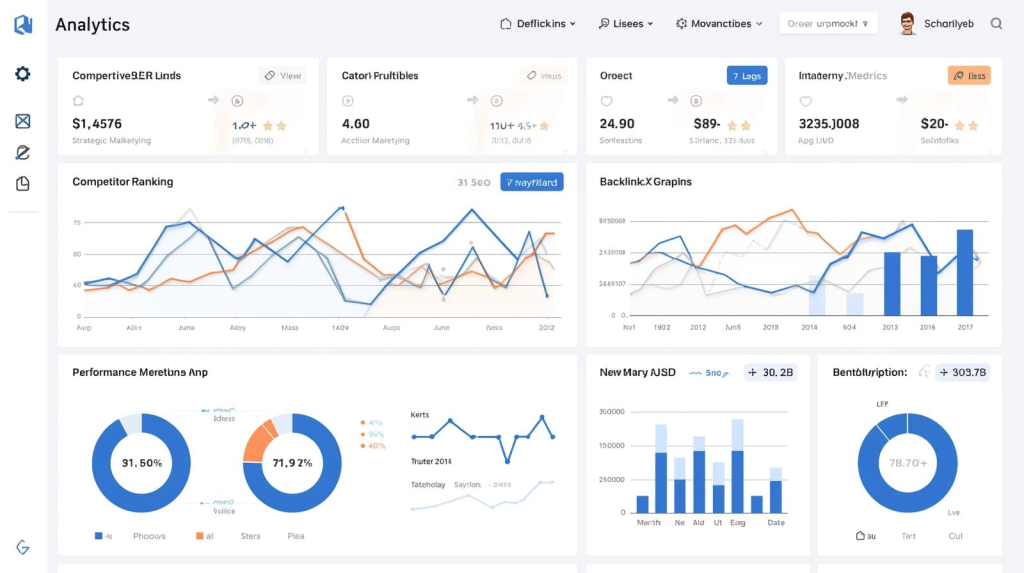
Analytics isn’t just for looking inward; it’s also for understanding your competitive landscape. While you can’t access your competitors’ Google Analytics data, you can use third-party SEO platforms to gain valuable intelligence.
Use tools like Semrush or Ahrefs to analyze your competitors’ top organic keywords. What terms are driving the most traffic for them? This can reveal new content topics and keyword opportunities for your own strategy. You can also see which of their pages earn the most backlinks. Analyzing their top-linked content can give you ideas for creating link-worthy assets of your own.
By regularly monitoring your competitors’ SEO performance, you can identify shifts in their strategy, spot emerging trends in the market, and ensure you maintain a competitive edge.
If your analytics data feels overwhelming or disconnected from actual lead quality, it may indicate gaps in tracking setup, keyword targeting, or funnel alignment. Reviewing these elements together often reveals opportunities that surface-level reports miss.
Conclusion: Putting Analytics into Action
Data is the lifeblood of a modern B2B SEO strategy. By consistently leveraging analytics, you can turn your SEO from a cost center into a predictable revenue driver.
Here are actionable tips to get started:
- Schedule Regular Reviews: Set aside time each month to review your analytics. Don’t just glance at the dashboard; dig into the reports in Google Analytics and Search Console.
- Focus on Trends: Look for trends over time, not just single-day spikes or dips. Are your organic traffic and conversions trending up and to the right?
- Connect SEO Metrics to Business Goals: Always tie your analysis back to business outcomes. Instead of just reporting on traffic, report on how that traffic influenced leads and sales opportunities.
- Test and Iterate: Use your data to form hypotheses about how to improve performance. Test your ideas, measure the results, and continually refine your approach.
By embracing an analytical mindset, you can build a more effective, efficient, and impactful B2B SEO strategy that delivers measurable business growth.
FAQ
What analytics are most important for a B2B SEO strategy?
The most important analytics for a B2B SEO strategy include organic traffic trends, keyword rankings, conversion paths, lead quality, bounce rate, and user engagement metrics. These data points help businesses understand how decision-makers interact with content and which pages drive qualified leads.
How does analytics improve B2B SEO performance?
Analytics improves B2B SEO performance by revealing what content attracts the right audience, which keywords convert, and where users drop off. By analyzing this data, businesses can optimize pages, refine keyword targeting, and improve content relevance for better search visibility and lead generation.
Which tools are best for tracking B2B SEO analytics?
Popular tools for tracking B2B SEO analytics include Google Analytics, Google Search Console, Ahrefs, and SEMrush. These tools help monitor organic traffic, keyword performance, backlinks, and user behavior, allowing data-driven SEO decisions.
How often should analytics be reviewed for B2B SEO?
B2B SEO analytics should be reviewed monthly for strategic insights and weekly for performance monitoring. Regular analysis helps identify trends early, measure campaign effectiveness, and adjust SEO strategies based on real performance data.
Can analytics help improve B2B lead generation through SEO?
Yes, analytics plays a key role in improving B2B lead generation through SEO. By tracking conversions, landing page performance, and user journeys, businesses can identify high-performing pages and optimize them to attract and convert high-intent leads.
