
Search engines don’t rank pages they rank answers to intent.
That’s why understanding and targeting buyer intent has become one of the most critical skills in modern SEO, content strategy, and digital growth.
Every search query carries a purpose. Some users want to learn, others want to compare options, and some are ready to take action. When content fails to align with that underlying intent, rankings stagnate, engagement drops, and even high-authority websites struggle to convert traffic into meaningful outcomes.
This pillar guide breaks down what understanding and targeting buyer intent really means, how search engines interpret intent signals, and how content creators can align their pages with real user expectations. From foundational concepts to advanced intent-mapping frameworks, this article is designed to help you build clarity, relevance, and long-term topical authority without relying on shortcuts, keyword stuffing, or sales-driven tactics.
If your goal is to create content that earns trust, satisfies search intent, and performs consistently across algorithm updates, mastering buyer intent is not optional. It is the foundation.
What Is Buyer Intent?
Buyer intent refers to the underlying goal a user has when they type a query into a search engine. It answers a simple but critical question:
Why is this person searching right now?
Search engines aim to satisfy intent, not just match keywords. Two users can search similar phrases but expect entirely different outcomes based on intent, context, and stage of awareness.
At its core, buyer intent connects:
- Intent psychology (what the user wants)
- Query language (how they express it)
- Content expectations (what result satisfies them)
Why Understanding And Targeting Buyer Intent Matters for SEO
Search engines no longer rank pages based only on keyword usage. They rank based on intent satisfaction signals, such as:
- Click-through rate (CTR)
- Dwell time
- Scroll depth
- Pogosticking behavior
- Content completeness and relevance
When content aligns with buyer intent:
- Rankings stabilize faster
- Pages earn topical authority
- Google trusts the site as a reliable entity
- AI-driven search systems interpret clarity more easily
Ignoring intent often leads to:
- High impressions, low clicks
- Traffic that never converts or engages
- Content cannibalization across pages
The Core Types of Buyer Intent
Understanding buyer intent starts with recognizing its primary categories. These are not rigid boxes, but behavioral patterns.
Informational Intent
Users are seeking knowledge or understanding.
Examples:
- What is buyer intent?
- How does search intent work?
- Why is intent important for SEO?
Content expectation:
Clear explanations, definitions, frameworks, examples, and educational depth.
This pillar page itself targets informational intent.
Navigational Intent
Users want to reach a specific website, brand, or platform.
Examples:
- Google Search Console login
- Ahrefs keyword explorer
- Masud Jubayer SEO site
Content expectation:
Direct access, brand clarity, trust signals.
Commercial Investigation Intent
Users are comparing options or researching before a decision.
Examples:
- Best SEO tools for intent research
- Ahrefs vs Semrush for intent analysis
Content expectation:
Comparisons, pros/cons, feature breakdowns, use cases.
Transactional Intent
Users are ready to take action.
Examples:
- Buy SEO audit service
- Hire affiliate SEO expert
Content expectation:
Clear CTAs, pricing context, reassurance, friction removal.
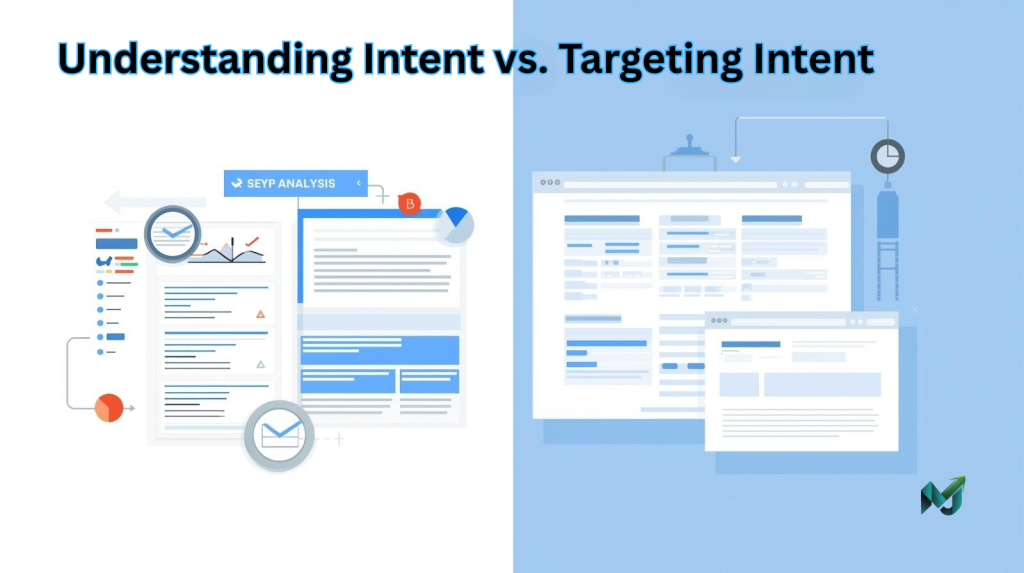
Understanding Intent vs. Targeting Intent
This distinction is critical and often misunderstood.
Understanding Buyer Intent
This is the analysis phase:
- Interpreting query meaning
- Identifying intent category
- Mapping search behavior patterns
- Studying SERP composition
Targeting Buyer Intent
This is the execution phase:
- Creating content that matches intent
- Structuring pages appropriately
- Choosing the correct content format
- Avoiding intent mismatch
Many sites fail not because they misunderstand intent but because they target the wrong intent with the wrong page type.
How Search Engines Interpret Buyer Intent
Search engines use multiple layers to infer intent:
Query Modifiers and Language Patterns
Words like how, why, best, compare, near me, price act as intent signals.
SERP Analysis
The current top-ranking pages reveal intent more clearly than any tool.
Ask:
- Are results blog posts, tools, or product pages?
- Are they long-form or short answers?
- Are visuals, videos, or FAQs dominant?
User Interaction Signals
Search engines observe how users behave after clicking results and adjust rankings accordingly.
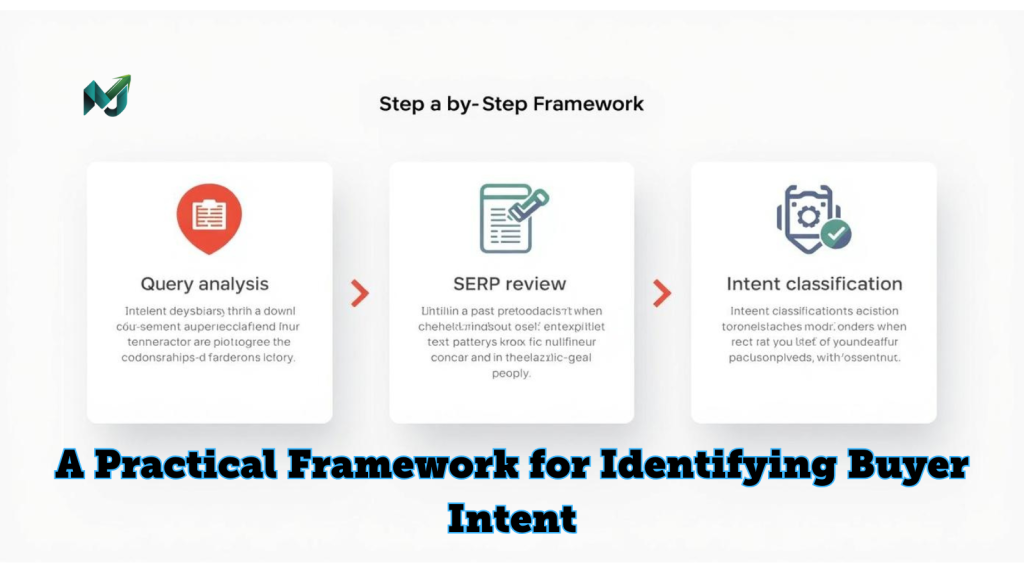
A Practical Framework for Identifying Buyer Intent
Use this three-step framework before creating or optimizing content.
Step 1: Analyze the Query Context
Look beyond the keyword itself:
- Is the query broad or specific?
- Does it imply learning, comparing, or acting?
- Is urgency present?
Step 2: Study the SERP Landscape
Manually analyze:
- Top 10 ranking pages
- Content format (guides, lists, tools)
- Depth and angle of coverage
SERPs rarely lie. They reflect intent consensus.
Step 3: Map Intent to Content Type
| Intent Type | Best Content Format |
| Informational | Pillar guides, tutorials |
| Navigational | Brand pages, homepages |
| Commercial | Comparison articles |
| Transactional | Service or product pages |
This mapping prevents misalignment and ranking stagnation.
Real-World Example: Intent Alignment in Practice
Consider the query:
“affiliate marketing keyword research”
The dominant intent is informational with light commercial investigation.
That’s why a comprehensive educational guide like this pillar page on keyword research outperforms sales pages. You can see this intent alignment in action on the related pillar resource here: 👉 affiliate marketing keyword research
Trying to rank a service page for that query would fail due to intent mismatch.
Common Mistakes When Targeting Buyer Intent
1. Mixing Multiple Intents on One Page
Trying to educate and sell heavily on the same page weakens clarity.
2. Assuming Intent Without SERP Validation
Tools suggest keywords; SERPs reveal intent.
3. Over-Optimizing for Keywords Instead of Outcomes
Exact-match keywords don’t compensate for poor intent alignment.
4. Treating Intent as Static
Intent evolves over time as markets mature and users become more informed.
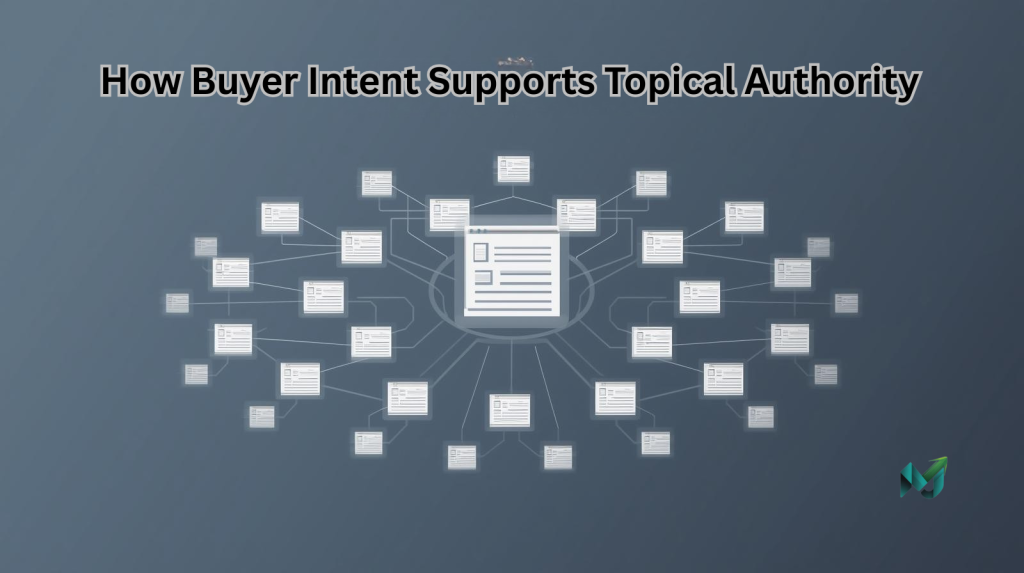
How Buyer Intent Supports Topical Authority
Topical authority is built when your site:
- Covers a topic comprehensively
- Addresses all intent stages
- Uses clear internal linking relationships
A strong intent-based architecture looks like this:
- Pillar page (broad informational intent)
- Cluster articles (specific sub-intents)
- Support pages (tools, comparisons, use cases)
All support and cluster articles should conceptually link back to this pillar to reinforce authority and semantic clarity.
Role of Internal Linking in Intent Mapping
Internal links help search engines:
- Understand content hierarchy
- Associate related intent clusters
- Identify authority hubs
This pillar naturally connects to:
- The homepage for entity trust: Masud Jubayer
- Relevant service context without selling pressure: Masud Jubayer Services
Future cluster articles should link back to this page when discussing intent analysis, content strategy, or keyword intent frameworks.
Measuring Whether Intent Targeting Is Working
Key indicators include:
- Improved average position without major link changes
- Higher engagement metrics
- Reduced bounce rate
- Better query-to-page matching in Search Console
Intent success is behavioral, not just ranking-based.
Final Perspective: Intent Is Strategy, Not a Tactic
Understanding and targeting buyer intent is not a one-time SEO task. It is a strategic lens that influences:
- Keyword research
- Content architecture
- Internal linking
- Long-term organic growth
Sites that master intent don’t chase algorithms they align with user reality. That alignment is what search engines ultimately reward.
Conclusion
Understanding and targeting buyer intent is not just an SEO technique it is a mindset shift. It forces you to stop thinking in terms of keywords alone and start thinking in terms of human motivation, search behavior, and decision stages.
When intent is correctly identified and matched with the right content format, everything improves: rankings stabilize, engagement signals strengthen, and search engines recognize your site as a reliable topical authority. This is how sustainable SEO is built not through tricks, but through alignment.
As you expand into more detailed cluster articles whether focused on intent types, SERP analysis, keyword modifiers, or intent mapping strategies this pillar should remain the central reference point. Each supporting article deepens understanding, while this page anchors the topic as a whole.
In a search landscape increasingly driven by relevance, context, and AI interpretation, the sites that win are the ones that understand why users search, not just what they search for. Buyer intent is the bridge between those two and mastering it puts you ahead for the long term.
FAQ
What does understanding and targeting buyer intent mean in SEO?
Understanding and targeting buyer intent in SEO means identifying why a user is searching and creating content that directly satisfies that purpose. It focuses on aligning pages with informational, navigational, commercial, or transactional intent so search engines and users find the content genuinely relevant.
Why is buyer intent important for ranking in Google?
Buyer intent is important because Google prioritizes pages that best satisfy user expectations, not just pages that match keywords. When content aligns with intent, it improves engagement signals like dwell time and click-through rate, which supports stronger and more stable rankings.
How do you identify buyer intent for a keyword?
Buyer intent is identified by analyzing:
The language and modifiers in the query
The type of pages ranking on the first page of Google
The content format Google prefers for that query
SERP analysis is the most reliable way to confirm whether intent is informational, commercial, or transactional.
What is the difference between understanding intent and targeting intent?
Understanding intent is the research and analysis phase, where you interpret what the user wants.
Targeting intent is the execution phase, where you create the correct type of content such as a guide, comparison, or service page to match that intent accurately.
How does buyer intent help build topical authority?
Buyer intent helps build topical authority by allowing websites to create structured pillar and cluster content that covers a topic across all intent stages. When pages are internally linked and intent-aligned, search engines recognize the site as a trusted, comprehensive source on the subject.
