
Search Engine Optimization in the business-to-business (B2B) space is a different game entirely. Unlike B2C marketing, where purchases can be impulsive and emotional, the B2B buying journey is long and complex. It involves multiple decision-makers across different roles and departments.
Your audience is not looking for a quick buy. They are researching solutions, comparing vendors, validating expertise, and seeking trusted partners to solve meaningful business challenges. A well-structured B2B SEO strategy helps your brand get discovered at every stage of this decision-making process, from early research to final evaluation.
This ultimate guide provides a comprehensive roadmap for building and executing a B2B SEO strategy that focuses on qualified visibility, sustainable organic growth, and long-term authority. Rather than relying on surface-level keyword tactics, this guide explores how to align SEO with decision-maker intent, create high-value informational content, and measure success using business-relevant signals.
By the end of this guide, you will understand how to build a sustainable organic growth engine that supports your entire marketing and sales ecosystem while maintaining an informational, education-first approach.
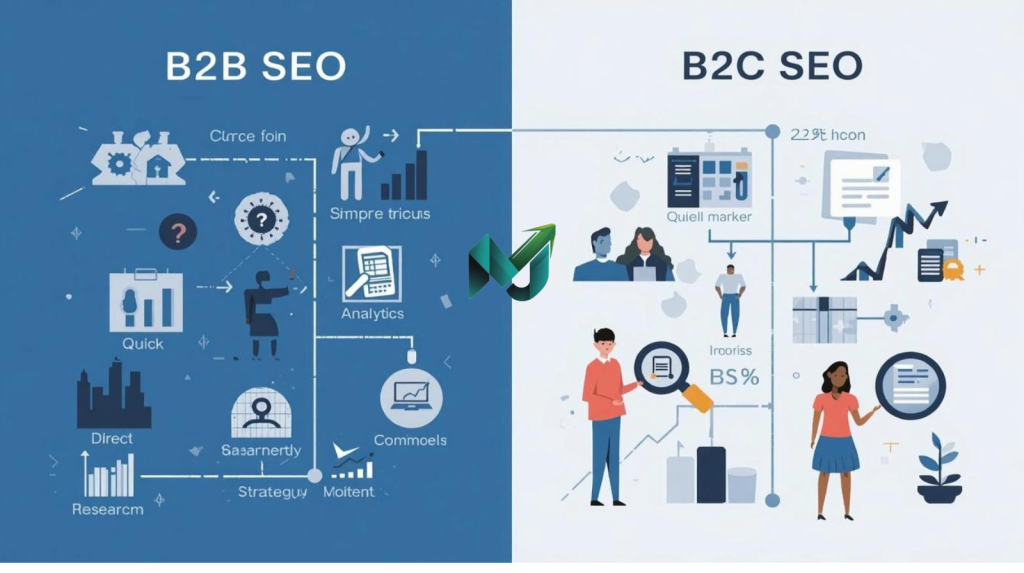
Why B2B SEO Demands a Unique Approach
The primary difference between B2B and B2C SEO lies in audience behavior and search intent. B2C users often search with direct transactional intent, using keywords such as “buy running shoes” or “best phone under $500.” In contrast, B2B buyers search for solutions to complex, high-impact problems.
Typical B2B queries are informational and highly specific, such as “supply chain management software for manufacturing” or “cybersecurity compliance solutions for healthcare.” These searches reflect research-driven intent rather than immediate purchase intent.
The B2B sales cycle can extend for months and usually includes research, internal discussions, demos, proposals, and approvals from teams such as finance, IT, operations, and executive leadership. Because of this complexity, a B2B SEO strategy must prioritize trust, authority, and clarity over time.
The objective is not only to rank for individual keywords but to become a reliable and authoritative resource that guides prospects from awareness through consideration and eventually toward a confident decision.
Core Pillars of a High-Performance B2B SEO Strategy
A strong B2B SEO strategy is built on three interconnected pillars:
- Technical SEO (Foundation)
- On-Page SEO and Content Strategy (Relevance)
- Off-Page SEO and Authority Building (Trust)
Each pillar supports the others. Weakness in any single area limits overall performance and reduces the long-term impact of your SEO efforts.

Pillar 1: Technical SEO for B2B Websites
Technical SEO ensures that search engines can efficiently crawl, index, and interpret your website. B2B websites often include complex site structures, multiple solution pages, gated resources, and large content libraries, which makes technical precision especially important.
Key Technical SEO Priorities
Site Architecture and Topic Clusters
A hub-and-spoke or topic cluster structure helps organize content logically. A central pillar page links to focused subpages that explore specific subtopics in depth. This structure strengthens internal linking, improves crawl efficiency, and reinforces topical authority.
Crawlability and Index Control
XML sitemaps, clean URL structures, and a properly configured robots.txt file help search engines prioritize important pages. This helps to avoid unnecessary crawl waste. Index control becomes critical for B2B sites with resource libraries, tags, and filtered URLs.
Page Speed and Core Web Vitals
Decision-makers expect fast, reliable digital experiences. Optimizing image delivery, reducing render-blocking scripts, and improving server response times helps meet Core Web Vitals benchmarks and support both rankings and engagement.
Mobile Optimization
B2B research increasingly happens on mobile devices, especially during early research stages. Responsive design and mobile usability are no longer optional and directly influence search visibility and user experience.
HTTPS and Security
Security functions as both a ranking signal and a trust factor. HTTPS is mandatory for B2B websites, particularly when handling contact forms, gated content, or sensitive business information.
Pillar 2: On-Page SEO and B2B Content Strategy
On-page SEO and content strategy represent the compounding growth layer of B2B SEO. This is where informational value, relevance, and expertise intersect.
B2B Keyword Research: Intent Over Volume
Effective B2B keyword research prioritizes intent rather than raw search volume. Low-volume keywords with clear business relevance often deliver more value than broad, competitive terms.
Problem-Oriented Keywords
Instead of generic phrases, focus on queries that reflect real operational or strategic challenges, such as:
- How to integrate CRM with ERP systems
- B2B lead generation strategy for SaaS
Buyer’s Journey Mapping
- Awareness (Top of Funnel)
These searches are informational and focus on identifying problems, symptoms, or industry challenges.
- Consideration (Middle of Funnel)
These queries compare approaches, solutions, or methodologies.
- Decision (Bottom of Funnel)
These searches involve brand names, implementation questions, pricing considerations, and case studies.
Mapping keywords to the buyer’s journey ensures that SEO supports the full revenue funnel rather than isolated traffic growth.
- Use Tools Strategically
Tools such as Ahrefs or Semrush help analyze competitor keywords and identify content gaps, while AnswerThePublic reveals the specific questions your audience is actively asking.
Content That Educates Decision-Makers
B2B content must inform, clarify, and demonstrate expertise.
- Solution Pages
Solution pages explain services or products in a detailed, benefit-focused way. They support keywords that signal commercial investigation while maintaining an educational tone.
- In-Depth Blog Posts and Guides
Long-form guides addressing complex topics attract qualified traffic and establish topical authority. Comprehensive resources outperform short, surface-level posts in B2B environments.
- Case Studies
Case studies provide proof through real-world examples, data, and outcomes. Optimizing them around use-case-driven keywords increases their informational and evaluative value.
- White Papers and E-books
Gated assets such as white papers allow deeper exploration of industry trends, frameworks, and research while supporting lead capture.
Pillar 3: Off-Page SEO and Authority Building
Off-page SEO focuses on strengthening credibility through external validation.
- High-Quality Backlinks
In B2B SEO, link quality matters more than quantity. Authoritative links from industry publications, research platforms, or trusted media outlets carry significant weight.
- Digital PR
Data-driven content, original research, and industry reports create opportunities for natural citations and editorial links from journalists and analysts.
- Guest Posting
Publishing expert insights on relevant industry blogs increases visibility and reinforces topical authority.
- Partnership Link Building
Collaborative content, such as webinars or co-authored white papers, enables natural link acquisition while expanding reach.

What Is The Best Seo Strategy For B2b Websites?
The most effective B2B SEO strategy uses a Topic Cluster (Hub-and-Spoke) model because it helps decision-makers trust your expertise. Instead of publishing isolated articles, you create one central hub page that covers a broad topic and support it with in-depth sub-pages focused on specific use cases, industries, or challenges. This structure clearly shows Google and your audience that you understand the topic deeply, allows you to rank for high-intent long-tail keywords, and naturally guides users from awareness to decision-making.
What Is A Good B2b Seo Strategy?
A strong B2B SEO strategy starts by understanding why decision-makers search. It focuses on solving real business problems with high-value content that speaks directly to buyer pain points at every stage of the journey.

How To Integrate Seo In A B2B Marketing Strategy?
To successfully integrate SEO into your B2B marketing strategy, start by using search data as the foundation of your content decisions, not a separate marketing task. When you align high-intent keyword research with your content calendar, every blog post, white paper, and case study directly addresses real buyer pain points from early research to final decision-making.
Use these SEO insights to guide email campaigns, social content, and nurturing sequences by repurposing topics that already perform well in organic search. Just as importantly, feed questions and objections from sales calls back into your keyword strategy to uncover content gaps your competitors often ignore. When SEO leads the content direction, it creates a scalable lead generation system that supports the entire B2B marketing funnel.
Integration Framework
To integrate SEO effectively, start by using search insights to shape your content calendar around real user intent, not assumptions. Repurpose high-performing SEO content into email campaigns and social posts to extend its reach and impact. Align feedback from your sales team with keyword research to uncover hidden demand and content gaps.
Use organic performance data to refine paid ads and ABM campaigns, ensuring every channel works from the same insight base. When SEO leads the content narrative, it becomes the central engine powering consistent and scalable demand generation.
What Are Common Pitfalls In A B2b Seo Strategy?
Many B2B companies struggle with SEO, not because they lack effort, but because they focus on the wrong priorities. One of the most common mistakes is targeting B2C-style, high-volume keywords that attract traffic but fail to bring decision-makers who are ready to act. In B2B, low-volume, problem-driven keywords usually generate far more qualified leads.
Another major pitfall is creating shallow content. Publishing short, surface-level blog posts may fill a content calendar, but it does not build authority or solve complex business problems. Decision-makers expect depth, clarity, and expertise; anything less weakens trust.
Many teams also ignore the full buyer’s journey. When content focuses only on sales-heavy, bottom-of-funnel pages, it misses opportunities to educate prospects in the awareness and consideration stages, where trust actually begins.
Tracking the wrong metrics creates long-term damage as well. Rankings and traffic look impressive, but they don’t pay the bills. A strong B2B SEO strategy measures qualified leads, demo requests, and revenue impact, not vanity numbers.
Finally, neglecting technical SEO quietly undermines everything else. Even the best content fails if the website loads slowly, blocks crawlers, or performs poorly on mobile. Technical SEO is the foundation; without it, growth stalls.

How To Use Analytics For A B2b SEO Strategy?
Don’t judge SEO success by traffic alone measure how it impacts your business. Use Google Analytics 4 (GA4) to track meaningful conversions such as demo requests, contact form submissions, and white paper downloads that indicate real lead quality. Then analyze which organic landing pages and blog posts consistently drive these actions.
In Google Search Console, review the Landing page + query string data to understand exactly which search terms bring high-intent visitors to your most valuable pages and uncover new content opportunities. When you use analytics this way, SEO stops being guesswork and becomes a reliable performance system tied directly to growth.
What To Track Beyond Traffic
In Google Analytics 4, track metrics that reflect real business intent not surface-level traffic. Prioritize demo requests, contact form submissions, and resource downloads to understand how organic users move into your pipeline.
Use Google Search Console to identify high-intent queries, landing pages that influence conversions, and keyword gaps where content expansion can unlock new opportunities.
A strong B2B SEO strategy measures pipeline impact and lead quality, not vanity metrics like raw traffic or impressions.

How To Use Video Content In A B2b Seo Strategy?
Use video to support your written content and keep decision-makers engaged longer. Publish videos on trusted platforms like YouTube or Wistia, and optimize titles and descriptions with keywords your audience actually searches for. Embed these videos inside blog posts and solution pages to improve dwell time and user engagement signals that Google closely monitors.
By combining a technically sound website, expert-driven on-page content, and authoritative backlinks from relevant industry sources, this approach builds trust, visibility, and qualified leads, not just traffic.
Turn your pillar content into short, focused videos for social media to highlight key insights and pull qualified traffic back to your website. Repurpose video transcripts into supporting articles, FAQs, or on-page content to strengthen topical relevance.
When used with clear intent, video becomes a powerful asset that amplifies SEO performance rather than just adding visual appeal.
Best Practices for Video SEO
Ultimately, a well-structured B2B SEO strategy will ensure you unlock business potential and stand out in your industry.
The right approach will position your business for long-term success and visibility in an increasingly digital landscape.
- Host videos on platforms like YouTube or Wistia
- Optimize titles, descriptions, and transcripts
- Embed videos within pillar pages
- Repurpose videos into short-form content

Executing and Measuring Your B2B SEO Strategy
A strategy is only as good as its execution and measurement.
Building a B2B SEO Roadmap
To grow B2B leads consistently from SEO, you first need absolute clarity on where you stand today. Start by auditing your current SEO performance across technical setup, on-page content, and off-page authority. This baseline shows what’s working, what’s broken, and where the biggest opportunities lie.
By following these best practices, you can effectively leverage B2B SEO strategies to drive meaningful engagement and conversions.
Ultimately, a successful B2B SEO strategy aligns closely with your overall marketing goals, ensuring all initiatives, including content, analytics, and technical SEO, work together harmoniously.
Tracking the right metrics creates long-term value. It ensures that your SEO efforts translate into tangible business outcomes, contributing to revenue and growth.
Next, define KPIs that reflect real business impact, not vanity metrics. Focus on primary goals like Marketing Qualified Leads (MQLs) from organic traffic, demo or consultation requests, and organic visits to high-intent solution pages. Support these with secondary metrics such as rankings for high-intent keywords, backlinks from authoritative sites, and organic conversion rates.
Once priorities are clear, decide what to execute first. You can’t fix everything at once, so use an impact-versus-effort framework. For example, optimizing titles and meta descriptions on your top landing pages delivers quick wins, while building a new content hub requires more time but creates long-term growth.
Finally, turn strategy into execution with a structured content calendar. Plan content based on keyword research and topic clusters, assign clear ownership, set realistic deadlines, and align every piece with a specific stage of the B2B buyer’s journey. This is how SEO becomes a predictable growth system, not a guessing game.
Reporting And Iteration
B2B SEO delivers results over time, but only if you measure the right signals and act on them consistently. Tracking performance isn’t about collecting numbers; it’s about understanding what moves qualified leads and revenue.
Monthly Reporting:
Create a focused monthly report that tracks both primary and secondary KPIs. Highlight trends, not just raw data. Clearly explain what performed well, what underperformed, and why. Most importantly, define the next actions based on those insights so SEO decisions stay data-driven.
Quarterly Strategy Reviews:
Use quarterly reviews to step back and evaluate the bigger picture. Assess whether your topic clusters are building authority, analyze changes in competitor behavior, and identify new industry trends or product updates that demand fresh content. Use these insights to refine priorities and update your SEO roadmap for the next quarter.
Conclusion
A strong B2B SEO strategy is built on understanding decision-makers.It delivers consistent informational value and earns long-term trust. By combining technical excellence, expert-level content, and credible authority signals, your website evolves from a static resource into a dependable organic growth engine.
This framework helps transform SEO into a strategic business asset that supports education, evaluation, and long-term visibility in competitive B2B markets.
FAQ
What is the SEO strategy for B2B?
A B2B SEO strategy focuses on attracting high-value business clients rather than just traffic. It starts with identifying problem-oriented, high-intent keywords that decision-makers search for. Then, you create authoritative content like guides, case studies, and white papers aligned with the buyer’s journey. Technical SEO, topic clusters, and high-quality backlinks ensure your website ranks and builds trust. The goal is not only to rank but to convert qualified leads and support long-term revenue growth.
What is the 80/20 rule for SEO?
The 80/20 rule in SEO means 80% of your results often come from 20% of your efforts. For B2B websites, this translates to focusing on high-impact pages and keywords that drive the majority of leads. Instead of spreading resources thin across hundreds of low-performing pages, prioritize optimizing top-performing content, building authority on key topics, and targeting high-intent search queries.
What is the rule of 7 in B2B?
The rule of 7 in B2B marketing states that a prospect needs to see your brand or message at least seven times before taking action. In SEO terms, this means your content, case studies, blog posts, and campaigns should repeatedly engage potential clients across multiple touchpoints. Consistent visibility builds trust, positions your company as an authority, and increases the chance of converting leads.
What are the 4 C’s of B2B marketing?
: The 4 C’s of B2B marketing focus on creating a client-centric approach:
1.Customer Value – Deliver solutions that solve real business problems.
2. Cost – Demonstrate ROI and justify investment in your solution.
3. Convenience – Make it easy for clients to research, contact, and purchase.
4. Communication – Engage decision-makers with personalized, relevant messaging.
Using the 4 C’s alongside a B2B SEO strategy ensures your content reaches the right audience and drives meaningful business outcomes.
How do you conduct B2B keyword research?
Start by analyzing the search intent of business decision-makers. Focus on long-tail, problem-oriented keywords like “B2B lead generation software for SaaS” or “enterprise cybersecurity solutions.” Use tools like Ahrefs, SEMrush, or AnswerThePublic to uncover gaps your competitors aren’t covering. Map keywords to the buyer’s journey for top, middle, and bottom-funnel content.
How do topic clusters improve B2B SEO?
Topic clusters organize your website around a central “pillar” page linked to multiple related sub-pages. This structure signals expertise to search engines, improves internal linking, and helps rank for both broad and long-tail keywords. For example, a pillar page on “B2B SEO Strategy” can link to guides on “Technical SEO for B2B” or “Content Marketing for Enterprise Clients.
How long does it take for B2B SEO to generate leads?
B2B SEO is a long-term strategy. Typically, noticeable results start appearing in 3–6 months, with consistent lead growth after 6–12 months. Factors like website authority, content quality, keyword competition, and technical SEO impact timelines. Tracking qualified leads, not just traffic, is critical to measuring true success.
Can Masud Jubayer help generate leads with B2B SEO services?
Yes. Masud Jubayer specializes in B2B SEO strategies that attract high-value business clients. By focusing on problem-oriented keywords, creating authoritative content, optimizing technical SEO, and building credible backlinks, he helps B2B companies generate qualified leads consistently. His approach aligns SEO with the buyer’s journey, ensuring your website not only ranks but converts visitors into real business opportunities.
This framework helps transform SEO into a strategic business asset that supports education, evaluation, and long-term visibility in competitive B2B markets.

Pingback: How to Use Analytics for Your B2B SEO Strategy