
If you are an affiliate marketer, traffic is your lifeblood. But not just any traffic, you need visitors who are ready to pull out their wallets. Sending thousands of people to your site is useless if none of them are interested in buying the product you are promoting. This is where affiliate marketing keyword research comes in. It is the bridge between a casual browser and a committed buyer.
In this guide, we will explore the most effective ways to conduct keyword research specifically for affiliate marketing. We will look at the tools you need, the strategies that work, and how to spot the “money keywords” that drive commissions.

Why Keyword Research is the Backbone of Affiliate Success
Many beginners skip deep research and jump straight to writing content about products they like. This is often a mistake. Without data, you are essentially guessing what your audience wants.
Effective keyword research allows you to:
- Target Buyer Intent: You can distinguish between people who are just looking for information (e.g., “what is a gaming laptop”) and those who are ready to buy (e.g., “best gaming laptop under $1000”).
- Avoid Unbeatable Competition: Some keywords are dominated by massive publishers like Amazon or The New York Times. Research helps you find the gaps where you can actually rank.
- Increase Conversion Rates: By targeting specific problems or needs, your content becomes the perfect solution, leading to higher click-throughs and sales.
Essential Tools Affiliate Marketing Keyword Research
You cannot build a house without a hammer, and you cannot do serious SEO without tools. While you can start for free, premium tools offer data that gives you a significant edge.
1. Google Keyword Planner (Free)
This is the standard starting point. It is free to use if you have a Google Ads account. While it is designed for advertisers, it gives great insight into monthly search volumes and competition levels. It is particularly good for brainstorming initial ideas.
2. Ahrefs and Semrush (Paid)
These are the heavy hitters of the SEO world. Both tools allow you to spy on competitors, see exactly what keywords they rank for, and analyze how difficult it will be to outrank them. They also provide “Keyword Difficulty” (KD) scores, which are invaluable for affiliates looking for low-hanging fruit.
3. AnswerThePublic (Freemium)
This tool visualizes search questions. If you type in “protein powder,” it will show you questions like “which protein powder is best for weight loss?” or “can protein powder expire?” These questions are goldmines for creating helpful, trust-building content.

Strategy 1: Understanding and Targeting Buyer Intent
A visually appealing, conceptual illustration representing the importance of keyword research for affiliate marketing success, specifically focusing on “Strategy 1: Understanding and Targeting Buyer Intent.”
The image features a robust, foundational structure meticulously constructed from a diverse array of relevant keywords, acting as a solid base supporting a dynamic growth chart and the abstract representation of a thriving online business. The aesthetic is clean and modern, employing a professional and optimistic color palette dominated by shades of blue and green, enhanced with subtle metallic accents.
The composition is balanced and intuitively understandable, utilizing a medium shot to effectively frame the central concept.:
- Informational: “How to lose weight.” (Low conversion, high traffic)
- Navigational: “Weight Watchers login.” (Zero conversion value for you)
- Commercial Investigation: “Best weight loss pills 2024” or “Weight Watchers vs. Noom.” (High conversion potential)
- Transactional: “Buy PhenQ discount code.” (Extremely high conversion potential)
The Best Way: Focus heavily on Commercial Investigation keywords. These users know they have a problem and are actively comparing solutions. They just need a final nudge.
Look for modifiers like:
- “Best [product category].”
- “[Product A] vs. [Product B]”
- “[Product] review”
- “Top 10 [products]”

Strategy 2: The “KGR” Method (Keyword Golden Ratio)
For new sites with low authority, ranking for broad terms is impossible. You need a strategy to find keywords with decent volume but very low competition. The Keyword Golden Ratio (KGR) is a popular method among affiliate marketers.
The Formula:
Allintitle results / Monthly Search Volume = KGR
- Allintitle: This is a Google search command (allintitle:your keyword) that shows how many pages have that exact phrase in their title tag.
- The Rule: If the KGR is less than 0.25, you should rank in the top 50 strictly by publishing a focused article.
Why it works: It identifies terms that people are searching for, but that no other webmasters have specifically targeted. It’s the perfect way to get your first trickle of sales.

Strategy 3: Mining Competitor Keywords
Why reinvent the wheel when your competitors have already done the work? One of the best ways to find profitable keywords is to look at successful niche sites in your industry.
How to do it:
- Identify 3-5 successful affiliate blogs in your niche.
- Plug their URL into a tool like Ahrefs or Semrush.
- Look at their “Top Pages” or “Organic Keywords” report.
- Filter for keywords with a Difficulty score you can manage (usually under 30 for newer sites).
- Look for pages where the competitor has weak content. If they are ranking with a 500-word article from 2018, you can likely beat them with a detailed, updated guide.

Strategy 4: The Power of Long-Tail Keywords
Long-tail keywords are phrases containing three or more words. They have lower search volume individually, but collectively they make up the vast majority of search traffic.
Example:
- Head Term: “Headphones” (Too broad, impossible to rank)
- Middle Tail: “Noise canceling headphones” (Still very competitive)
- Long Tail: “Best noise canceling headphones for sleeping without music” (Specific, low competition, highly targeted)
The person searching for that long-tail phrase has a very specific need. If you write an article reviewing headphones specifically for sleeping, your conversion rate will be sky-high because you are answering their exact query perfectly.
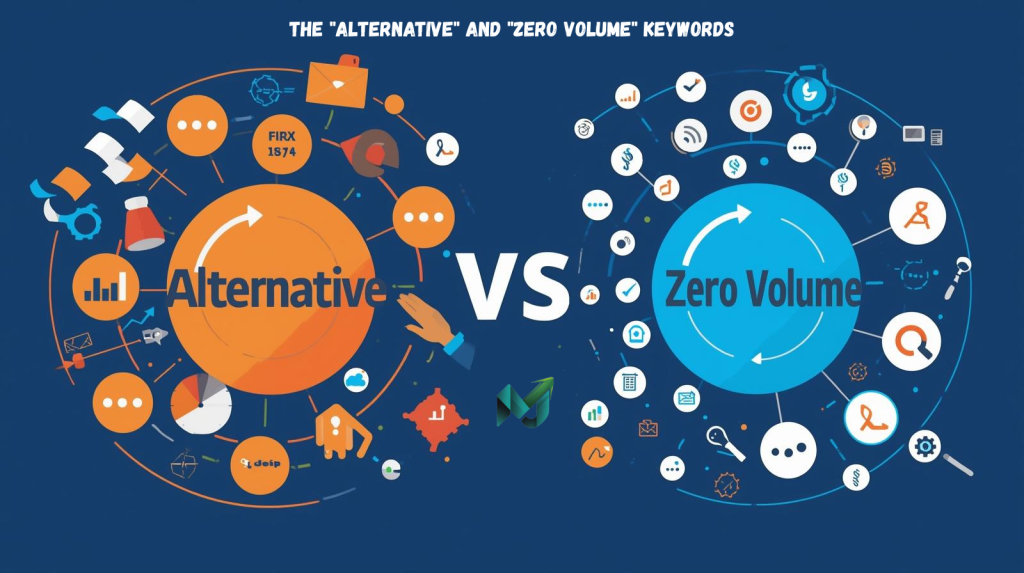
Strategy 5: The “Alternative” and “Zero Volume” Keywords
Do not be afraid of keywords that tools say have “0” search volume. Tools are estimates, not gospel. Often, new products or very specific queries show zero volume but actually get 10-50 visits a month.
The “Alternative” Technique:
Target keywords like “[Popular Product] alternatives.”
- Example: “Jasper AI alternatives.”
People searching for this are usually unhappy with the popular product (perhaps it’s too expensive or lacks features) and are actively seeking a new place to spend their money. These are incredibly easy sales to make if you recommend a solid competitor.
Analyzing the Competition on Page One
Before you commit to writing, you must look at the actual Google search results (SERPs). Tools give you numbers, but your eyes provide you with context.
Type your potential keyword into Google and ask:
- Who is ranking? Are they massive brands like Forbes or Amazon? Or are they small blogs and forums (Reddit/Quora)? If you see forums on page 1, that is a green light. It means Google can’t find a good authoritative article to show.
- Is the intent matched? If you search for “best running shoes” and the results are all e-commerce product pages (like Nike.com), it will be hard to rank a blog post review. Google thinks the user wants to buy, not read. You want to see the rankings of other affiliate blogs.
Conclusion
Affiliate marketing keyword research is a skill that pays dividends. By shifting your focus from “getting traffic” to “getting the right traffic,” you can build a leaner, more profitable business.
Start by identifying your audience’s pain points. Use tools to validate your ideas, but don’t ignore your intuition about what your specific niche needs. Look for the commercial intent, dive deep into long-tail phrases, and always analyze who you are up against.
Your next high-commission sale is waiting in a keyword list you haven’t built yet. Open your tools, start searching, and optimize your next campaign for success.
This guide is part of the in-depth SEO resources published on MasudJubayer.com, where we share practical strategies for sustainable organic growth.

Pingback: Importance of Keyword Research in Affiliate Marketing (2026)
Pingback: Understanding and Targeting Buyer Intent: Smart Guide 2026